
What Causes Thatch Roof Leaks in Florida?
Updated: 5 days ago
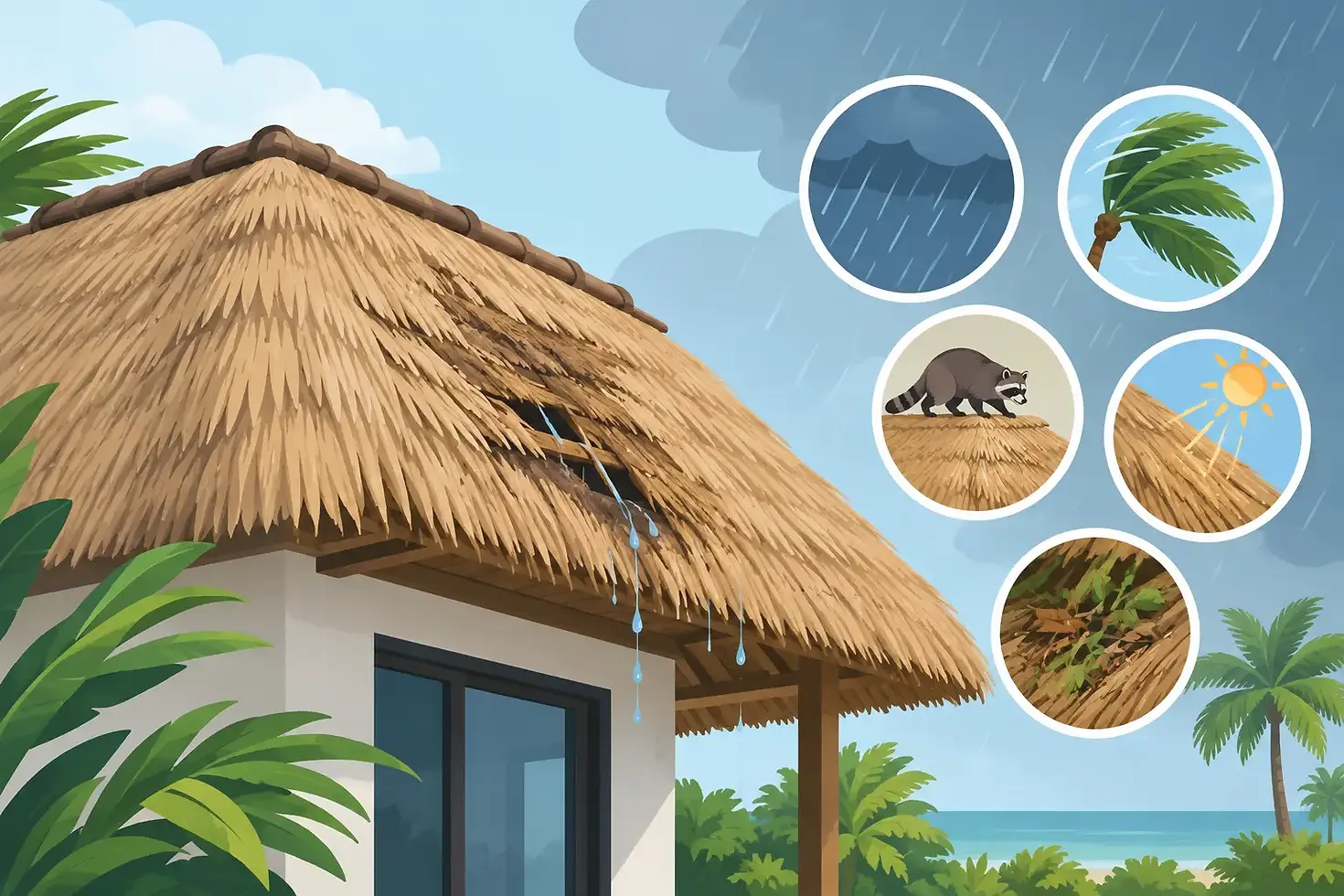
A thatched roof should shed rain quickly, even during a heavy Miami downpour. When water reaches the seating area, bar, pool deck, or finished ceiling below, the issue is rarely just one bad palm frond. Understanding what causes thatch roof leaks helps property owners protect the structure, avoid repeat repairs, and make a sound decision about maintenance or rethatching.
Unlike a conventional shingle roof, natural thatch works as a dense, layered surface. Rain runs down the outside of tightly packed palm material while the interior stays dry. That system depends on material quality, correct roof pitch, proper layering, and regular attention after South Florida weather takes its toll. When one of those elements fails, water finds a path inside.
What Causes Thatch Roof Leaks Most Often?
The most common cause is thinning or worn thatch. Palm fronds do not last forever under intense sun, humidity, rain, wind, and salt air. Over time, the outer layers lose density. The roof may still look acceptable from the ground, but its water-shedding capacity is reduced.
A thin spot can allow rain to travel farther into the roof before it drains away. During a light shower, that may not be noticeable. During a hard, wind-driven storm, water can push through the weakened section and drip below. This is why a leak that appears only during severe rain should not be ignored. It often signals that the thatch is nearing the point where a larger area needs attention.
Roof age matters, but exposure matters just as much. A hut near Biscayne Bay, on an open pool deck, or in a high-wind commercial setting can weather faster than a more protected residential structure. The type and quality of the original palm material also affect service life.
Improper Installation or Insufficient Layering
A well-built thatched roof is not simply palm material tied onto a frame. The thatch must be installed in consistent, overlapping courses that direct water outward. Each layer needs enough coverage to protect the layer below it. If the material is installed too thinly, attached loosely, or spaced unevenly, rain can work between the courses.
Poor workmanship is particularly visible around ridges, hips, valleys, and roof edges. These areas need careful detailing because they change the direction of water flow. A ridge that is not properly capped can leak directly from the top. A valley with inadequate coverage can collect water and funnel it into the roof instead of away from it.
The roof pitch must also be appropriate for thatching. A steep enough pitch encourages runoff. A roof that is too flat holds moisture longer and makes it easier for water to migrate through the material. On a tiki hut or chickee hut, the framing and thatching must work as one system. Replacing palm material without correcting a design or framing issue may only postpone the next leak.
Hurricane Winds and Storm Damage
South Florida storms can damage a thatched roof without tearing away a dramatic section of material. Strong gusts may lift fronds, loosen fasteners, open small gaps, or shift ridge material. Once the layering is disturbed, wind-driven rain can enter through areas that previously shed water properly.
Falling branches and airborne debris can puncture or compress the thatch. Even a small impact can create a depressed area where water pools instead of draining. After a tropical storm, look for uneven roof lines, exposed ties, loose palm bundles, missing material, or fronds that appear lifted at the edges.
Do not assume that a roof is sound because it survived the storm visually. A qualified inspection can identify hidden displacement before the next rain event turns it into an interior leak.
Debris, Moisture, and Organic Buildup
Leaves, seed pods, branches, and other debris can trap moisture on the roof surface. That trapped moisture slows drying, adds weight, and accelerates deterioration in natural palm thatch. It may also create a damp environment where organic growth can develop.
Overhanging trees are a frequent contributor. They drop debris onto the roof and can scrape the thatch during high winds. Trimming branches back from the structure reduces impact damage and helps the roof dry after rain.
Cleaning requires care. Aggressive pressure washing, harsh chemicals, or walking directly on natural thatch can damage the fibers and compress the layers that keep water out. The right maintenance approach depends on the roof material, age, and condition. A roof that needs repeated spot cleaning or temporary patching may be a better candidate for partial or full rethatching.
Leaks Around Penetrations and Add-Ons
A thatched roof becomes more complex when lighting, fans, electrical conduits, speakers, drainage components, or decorative features are added after construction. Any penetration through the roof or structural connection near the thatch needs to be handled correctly. Otherwise, it can create a direct path for water.
This is especially relevant for commercial bars, restaurants, resorts, and outdoor entertainment spaces. Owners often add lighting and amenities as the space evolves. Those upgrades should be coordinated with a contractor who understands both thatch construction and the roof's drainage pattern.
Water may also travel along a conduit, wire, or framing member before it appears inside. The visible drip is not always directly below the entry point. That makes a quick surface patch unreliable unless the full path of the water is identified.
Structural Movement Can Create New Gaps
Natural wood framing responds to heat, humidity, and time. Structural movement, settling, or a weakened support connection can change the roof's shape enough to disrupt thatch layering. A sagging section can hold water. A shifted ridge line can separate materials that once overlapped tightly.
This does not always mean the entire structure needs replacement. It does mean the framing should be inspected before new thatch is applied. Rethatching over compromised wood can hide a structural issue while allowing leaks and deterioration to continue.
For permitted structures and larger commercial installations, this evaluation is particularly valuable. The goal is not merely to stop a drip. It is to preserve a safe, durable tropical structure that performs as designed.
How to Tell Whether You Need Repair or Rethatching
A localized repair can make sense when the roof is generally dense and sound but has a specific storm-damaged area, loose ridge section, or isolated penetration issue. The repair needs to blend into the existing water-shedding pattern, not sit on top as a cosmetic patch.
Full rethatching is often the more cost-effective choice when leaks occur in multiple locations, the roof looks visibly thin, palm material is brittle or deteriorated, or repairs have become frequent. Replacing the thatch across the full roof provides consistent coverage and allows the contractor to inspect the underlying framing at the same time.
Artificial thatch can also be worth considering for owners who want a tropical appearance with a different maintenance profile. It is not the same product as natural palm, and the right choice depends on the desired look, budget, building requirements, fire-retardant needs, and level of weather exposure. A professional recommendation should account for the full structure rather than treating material selection as a one-size-fits-all decision.
Preventing Future Thatch Roof Leaks
The best prevention is routine inspection before the rainy season and after major weather events. Watch for thinning areas, loose material, altered roof lines, sagging, exposed fasteners, debris buildup, and water stains on any ceiling or finished surface below.
Do not wait for a small drip to become an active failure. Water entering a thatched structure can affect wood framing, electrical fixtures, furniture, bar equipment, and guest comfort. For hospitality properties, even a minor roof leak can interrupt service and diminish the experience the space was built to create.
Since 1987, Tiki Huts has built and maintained tropical structures for the conditions South Florida owners face every year. The right repair starts with an honest assessment of the roof material, installation details, drainage, and structural condition.
A dry thatched roof comes from skilled layering, sound framing, and timely maintenance. If rain is getting through, treat it as a signal to inspect the entire roof system before the next storm tests it again.
Call Tiki Huts at 305-259-0099 or request a free estimate at https://www.tikihuts.com/contact-us.


Comments